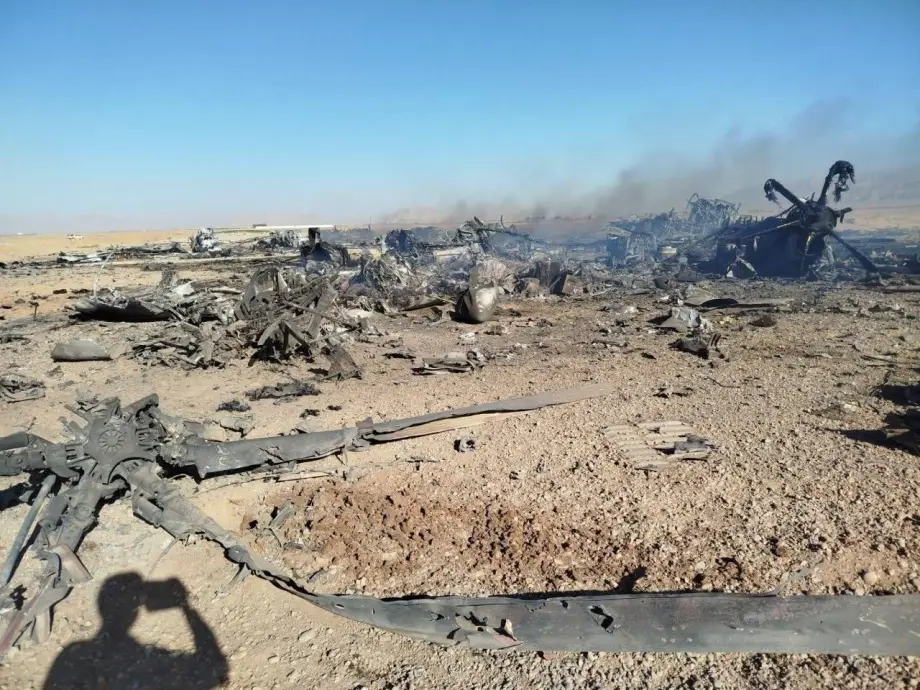
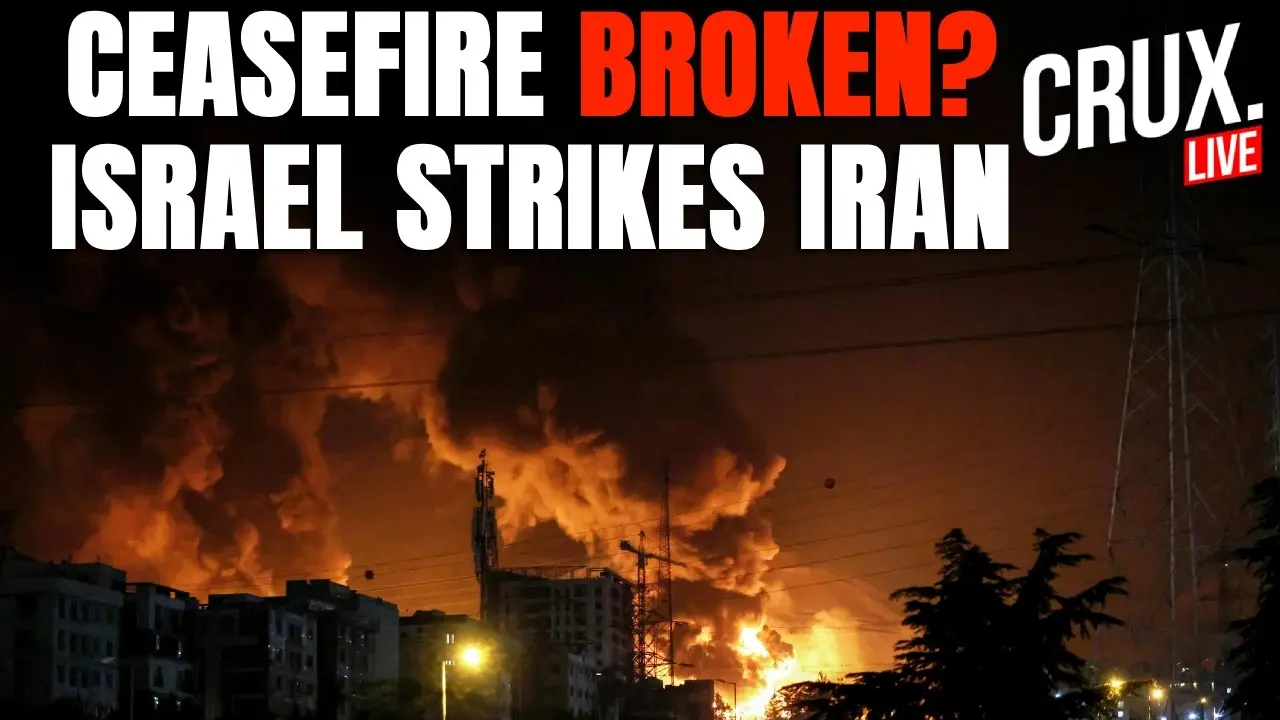

In the immediate aftermath of the announcement of a two-week ceasefire between the United States and Iran, the reality on the ground diverged sharply from the language of diplomacy. Within hours, Israeli warplanes launched what has been widely described as the largest and most intense wave of attacks on Lebanon since the current phase of the war began, striking Beirut’s southern suburbs, the Bekaa Valley, and multiple cities across the south in rapid succession.
According to humanitarian reports, more than one hundred strikes were carried out in a single day, with dozens of Israeli fighter jets targeting heavily populated civilian areas. The Red Cross confirmed that at least 300 people were killed or injured in the initial assault, while Lebanon’s health ministry reported that hospitals were overwhelmed with casualties. Entire residential districts were reduced to rubble, and strikes on cities such as Tyre and Sidon left additional civilian deaths as forced evacuation warnings were followed almost immediately by bombardment.
The scale and character of the attacks have drawn particular scrutiny. Multiple accounts emphasize that no clear military targets were identified in many of the strikes, with bombing patterns suggesting widespread targeting of civilian infrastructure. As one assessment described it, Israel carried out over one hundred strikes with dozens of fighter jets attacking heavily populated areas and no military targets whatsoever, in what appeared to be an escalation rather than a de-escalation following the ceasefire announcement.
At the same time, Hezbollah had reportedly halted rocket fire in accordance with the ceasefire framework, and Iranian officials were preparing for negotiations. Instead of reciprocal de-escalation, Israel intensified its military operations, raising immediate questions about whether the ceasefire had already been breached or whether it had ever meaningfully taken effect.
The humanitarian consequences have been severe. Israeli operations across southern Lebanon have displaced approximately 1.2 million people, creating one of the largest displacement crises in the region in recent years. With infrastructure damaged, hospitals overwhelmed, and continued airstrikes reported, the situation on the ground remains volatile and increasingly unsustainable.
“There Has Never Been Such a Political Disaster”
While Lebanon came under intense bombardment, a different kind of shockwave was spreading through Israel’s political system. The silence from the office of Prime Minister Benjamin Netanyahu stood in stark contrast to the extraordinary wave of criticism coming from across the political spectrum.
Opposition leader Yair Lapid delivered one of the most scathing assessments in Israel’s modern political history, stating:
“There has never been such a political disaster in all of our history. Israel wasn’t even at the table when decisions were made concerning the core of our national security. The military carried out everything it was asked of it. The public demonstrated amazing resilience. But Netanyahu failed politically, failed strategically and didn’t meet a single one of the goals that he himself set.”
He went further, warning that it would take years to repair the damage caused by what he described as arrogance, negligence, and a lack of strategic planning.
These remarks capture a central grievance emerging within Israel: that the country not only failed to achieve its objectives, but was sidelined from negotiations that directly impacted its core security interests.
“None of the Goals Were Achieved”
The criticism did not stop at the opposition. Senior figures with military and security experience delivered equally blunt assessments.
Avigdor Lieberman warned that the ceasefire effectively grants Iran time to regroup and will force Israel to return to conflict under more difficult conditions and at a heavier cost.
Meanwhile, Yair Golan delivered a stark evaluation that cut to the heart of the war’s outcome:
“None of the goals were achieved. The nuclear program was not destroyed. The ballistic threat remained and the regime remained intact—and even emerged from this war stronger.”
He directly accused Netanyahu of misleading the public:
“Netanyahu lied. He promised a historic victory and security for generations. And in reality, we suffered one of the most serious strategic failures Israel has ever known.”
These statements collectively reflect a growing internal consensus that the war has not only failed to weaken Iran but may have strengthened it.
A Ceasefire Imposed, Not Negotiated
A recurring theme in Israeli reaction is exclusion from the diplomatic process.
As Lapid emphasized, Israel was not even at the table.
Negotiations were conducted directly between the United States and Iran, with Washington ultimately accepting Iran’s 10-point proposal as a workable basis for talks. That proposal includes Iranian control over the Strait of Hormuz, the right to enrich uranium, removal of sanctions, compensation for war damage, withdrawal of U.S. forces, and a ceasefire across all fronts, including Lebanon.
For Israel, the outcome represents a fundamental strategic shift. A war launched to reshape the region has instead resulted in decisions being made without Israeli participation.
“Who Begged for a Ceasefire? The United States”
Contrary to official narratives, reporting suggests that it was not Iran but the United States that pushed for a halt.
“Who begged for a cessation of violence?… Donald Trump. The United States.”
U.S. officials reportedly began seeking negotiations weeks into the conflict, using intermediaries to approach Tehran. Iran initially rejected these overtures, only agreeing to talks once its own conditions were accepted as the framework.
This marks a dramatic reversal from earlier rhetoric, which included threats to destroy Iran entirely. The shift from maximalist war aims to negotiation under Iranian terms underscores the scale of the strategic reversal.
Strategic Defeat on a Historic Scale
The outcome of the war is now being described in stark terms.
According to one assessment, the United States has suffered its biggest strategic defeat since emerging as a superpower, potentially surpassing Vietnam, Iraq, and Afghanistan in geopolitical impact.
The war was launched with clear objectives: to overthrow Iran’s government, destroy its military capabilities, and reassert dominance in the region. None of these goals were achieved.
Instead, Iran’s regime remains intact, its missile and drone capabilities remain operational, and its regional influence has expanded.
As one analyst put it:
“They are not defeated… they have won. It’s just the United States doesn’t want to concede that it has lost.”
Iran’s Strategic Gain: Control of the Strait of Hormuz
The most consequential shift may be economic rather than military.
The ceasefire framework has effectively cemented Iran’s control over the Strait of Hormuz, one of the most critical chokepoints in the global economy. Iran has demonstrated that it can regulate maritime traffic, impose tolls, and potentially close the waterway entirely.
As one description explained, Iran now determines which ships pass and under what conditions, including the ability to impose fees in its own chosen currency.
Estimates suggest Iran could generate tens of billions annually through transit fees, while gaining unprecedented leverage over global energy markets.
War Built on Miscalculation
New reporting suggests the war was launched under deeply flawed assumptions.
Israeli officials reportedly assured Washington that Iran’s regime was close to collapse, that its missile capabilities could be neutralized quickly, and that internal unrest would lead to regime change.
Instead, the outcome has been the opposite.
“Regime change? No. Missiles neutralized? No. Control of Hormuz? Now the Iranians have it.”
The war has exposed a pattern of overconfidence and strategic miscalculation at the highest levels.
Military Limits Exposed
Despite overwhelming firepower, the United States and Israel failed to achieve decisive results.
Reports indicate that U.S. military infrastructure across the region has been significantly degraded, that billions of dollars in aircraft losses have occurred, and that naval operations have been constrained by Iranian defensive capabilities.
As one assessment noted, the war exposed the limitations of U.S. military power in the region in stark terms.
Meanwhile, Iran demonstrated sustained retaliatory capability, including the ability to strike U.S. bases and Israeli targets, fundamentally altering deterrence dynamics.
Lebanon as the Breaking Point
The continuation of Israeli attacks on Lebanon now threatens to collapse the ceasefire entirely.
Iranian officials have made clear that any ceasefire must apply across all fronts, warning that there can be no selective application of the agreement.
“Either a ceasefire on all fronts or no ceasefire at all.”
Lebanon is explicitly included in the framework, and continued Israeli attacks risk triggering a broader regional escalation.
At the same time, a new doctrine appears to be emerging in which multiple fronts are treated as interconnected.
Statements from regional actors emphasize that Lebanon will not stand alone and that any attack may trigger a coordinated response across the region.
A Fragile and Dangerous New Reality
Israel now finds itself in a deeply contradictory position, politically weakened, strategically outmaneuvered, and militarily escalating despite a ceasefire framework that was supposed to halt regional conflict.
The United States faces a parallel dilemma, confronting strategic defeat, economic consequences, and diminished global influence.
Iran, by contrast, has emerged with enhanced regional leverage, control over critical economic chokepoints, and strengthened strategic credibility.
Conclusion: A Ceasefire in Name Only
As Israeli airstrikes continue across Lebanon and Iran signals that it will not tolerate violations, the central contradiction becomes impossible to ignore.
This is not a stable ceasefire, nor a clear end to the war. It is a fragile and contested pause shaped by competing interpretations, ongoing violence, and a profound shift in the balance of power.
What has emerged is not victory, but a new geopolitical reality in which long-standing assumptions have been overturned, military power has reached its limits, and the consequences of strategic miscalculation continue to unfold.
The ceasefire may exist on paper, but on the ground, the war—and its implications—are far from over.