


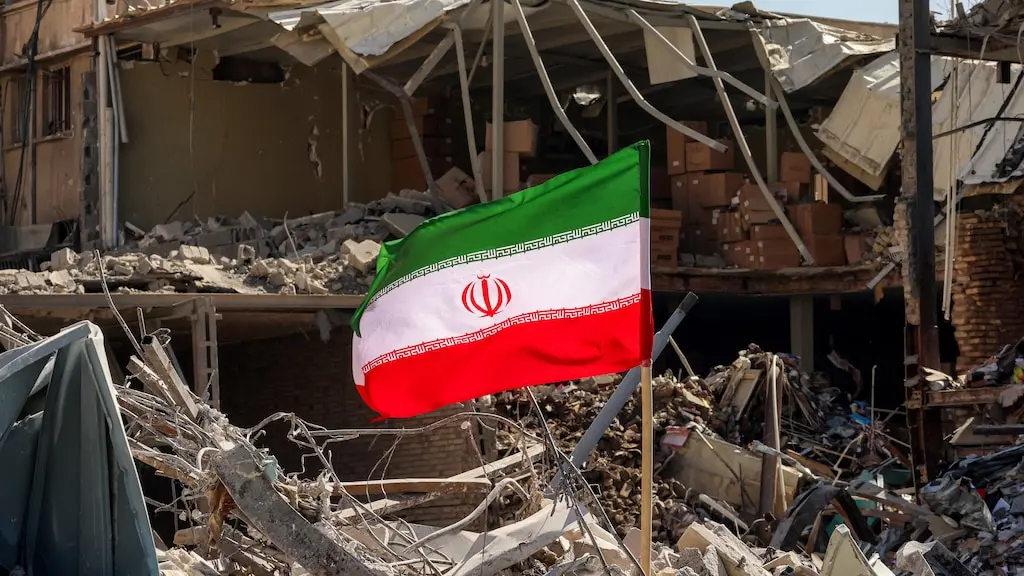
A striking admission from senior U.S. officials has torn through the dominant narrative of the war on Iran, exposing what critics are calling a “roll call of shame”—a named list of Arab governments that actively “fought alongside” the United States in military operations widely portrayed as defensive.
At the center of the revelation is U.S. Defense Secretary Pete Hegseth, whose remarks—backed by Joint Chiefs Chairman Dan Kaine—left little room for ambiguity. In a public briefing, Hegseth explicitly thanked Saudi Arabia, the United Arab Emirates, Bahrain, Qatar, Kuwait, and Jordan, stating that they had “fought shoulder-to-shoulder” with U.S. forces.
The phrasing is critical. This was not a reference to passive cooperation, intelligence sharing, or defensive hosting of bases. It was, in the Pentagon’s own words, a confirmation of direct participation in combat operations.
A Public Admission That Contradicts Months of Messaging
For weeks, political leaders and media outlets across the Gulf had maintained a careful line: that their countries were not involved in offensive operations against Iran, and in some cases had even warned the United States not to launch attacks from their territory.
Yet the Pentagon’s own statements now contradict those claims.
Officials in Washington did not hedge their language. They did not describe these states as observers or reluctant partners. Instead, they emphasized unity in action—“fought alongside each and every one of us every day,” as Kaine put it—highlighting a sustained, coordinated military effort involving multiple Arab governments.
The admission has triggered accusations of duplicity, with critics arguing that regional leaders publicly distanced themselves from the war while privately participating in it.
From “Iranian Aggression” to Coordinated War
The implications of this disclosure extend far beyond diplomacy—they strike at the heart of how the conflict itself has been framed.
Mainstream coverage repeatedly cast Iran as the aggressor, particularly following missile and drone strikes that hit U.S. installations and infrastructure across Gulf states. These actions were widely described as attacks on neighboring countries, reinforcing the perception that Iran was lashing out indiscriminately.
But the Pentagon’s admission reframes those events entirely.
If Saudi Arabia, the UAE, Bahrain, Qatar, Kuwait, and Jordan were actively “fighting alongside” the United States, then they were not neutral parties. They were co-belligerents.
Under that reality, Iranian strikes on their territory take on a different meaning: not unprovoked aggression, but retaliation against states participating in military operations against Iran.
The distinction is not merely semantic—it carries profound legal and political consequences.
The United States at the Center
The remarks also place responsibility squarely on U.S. leadership.
President Donald Trump, as commander-in-chief, authorized the actions that triggered the conflict. While speculation persists about internal pressures or external influence, the chain of command is clear: the decisions that led to these operations originate at the top.
As the transcript makes clear, questions about motivation—whether political, strategic, or ideological—are secondary to accountability. The authority to act rests with the U.S. executive, and with that authority comes responsibility for the consequences.
Israel’s Parallel Track: Ceasefire in Name Only
At the same time, Israeli leadership has made clear that any notion of de-escalation is limited at best.
Prime Minister Benjamin Netanyahu has openly stated that while a temporary ceasefire may exist—brokered in coordination with the United States—Israel retains “goals to complete.” According to Netanyahu, those goals will be achieved either through agreement or by resuming full-scale combat.
“We are prepared to return to combat at any moment,” he said, emphasizing that Israel’s “finger is on the trigger.”
Crucially, Netanyahu clarified that the ceasefire does not extend to Lebanon. That front, he stated unequivocally, “is out of the question.”
Lebanon: A Continuing Front of Violence
The exclusion of Lebanon from ceasefire arrangements has already had devastating consequences.
Israeli operations there have intensified, with reports of heavy bombardment in densely populated civilian areas. According to the material provided, hundreds of civilians have been killed, with the death toll exceeding 180 and approximately a thousand wounded—figures that continue to rise.
These attacks, described by critics as targeting innocent populations, are framed by Israel as necessary to restore security for residents in the north. Yet the scale of civilian casualties has fueled accusations of disproportionate force and collective punishment.
Netanyahu himself described the campaign as delivering “the hardest blow” Lebanon has suffered in years—a statement that underscores the severity of the ongoing assault.
A Unified Axis—No Longer Deniable
One of the most significant takeaways from the Pentagon’s admission is the clarity it brings to the structure of the conflict.
What might once have been described as overlapping or parallel operations now appears as a unified campaign involving the United States, Israel, and a bloc of Arab states.
The transcript underscores this point: “it isn’t just Israel and it isn’t just the United States… both of them are making the decision… and now both of them are on the same page.”
The addition of named Arab participants transforms that alignment into a broader coalition—one that had, until now, largely remained obscured behind diplomatic language and media framing.
Contradictions and Collapsing Diplomacy
The emerging reality also clashes with earlier international messaging.
Pakistan’s Prime Minister Shehbaz Sharif had indicated that the ceasefire would apply across multiple fronts—not just Iran, but also other areas of conflict.
Yet the current situation contradicts that understanding. Israel continues operations in Lebanon. The United States signals readiness to resume hostilities. And the newly revealed coalition suggests that multiple states remain engaged.
This divergence raises serious questions: was there ever a unified agreement, or were different actors operating under different assumptions from the outset?
Silence, Media, and Strategic Messaging
Another striking element is what was not said—or not widely reported.
According to the tone of the transcript, many regional actors were quick to condemn Iran’s actions while remaining silent on U.S. or Israeli operations. Criticism of Israel was often described as muted or framed in cautious diplomatic language, while the United States was rarely directly challenged.
The suggestion is one of asymmetry: a reluctance to confront Western power openly, even as involvement in its military actions deepened behind the scenes.
This dynamic extends to media coverage, where narratives of Iranian aggression dominated headlines, while the role of U.S. allies remained underreported or framed as defensive.
Now, with the Pentagon itself confirming active participation, that narrative is increasingly difficult to sustain.
What Comes Next
The central question now is how Iran will respond.
The transcript points to this as the “most important” issue: what actions Tehran will take following what is described as a “blatant move” by the United States and Israel to continue operations—particularly in Lebanon—despite ceasefire claims.
With misinformation spreading rapidly and competing narratives vying for dominance, the situation remains volatile. What is clear, however, is that the conflict is no longer confined to a bilateral confrontation.
It is a regional war—one that, according to the United States itself, involves a coalition of states that until recently denied or downplayed their role.
A Narrative Exposed
In naming names, Pete Hegseth did more than thank allies—he exposed the architecture of the war.
The “roll call of shame,” as critics now describe it, has transformed understanding of the conflict. It reveals that what was widely portrayed as Iranian aggression against its neighbors was, in fact, a far more complex reality: a coordinated military campaign involving the United States, Israel, and multiple Arab governments.
And with that revelation, the narrative that defined the war may no longer hold.