


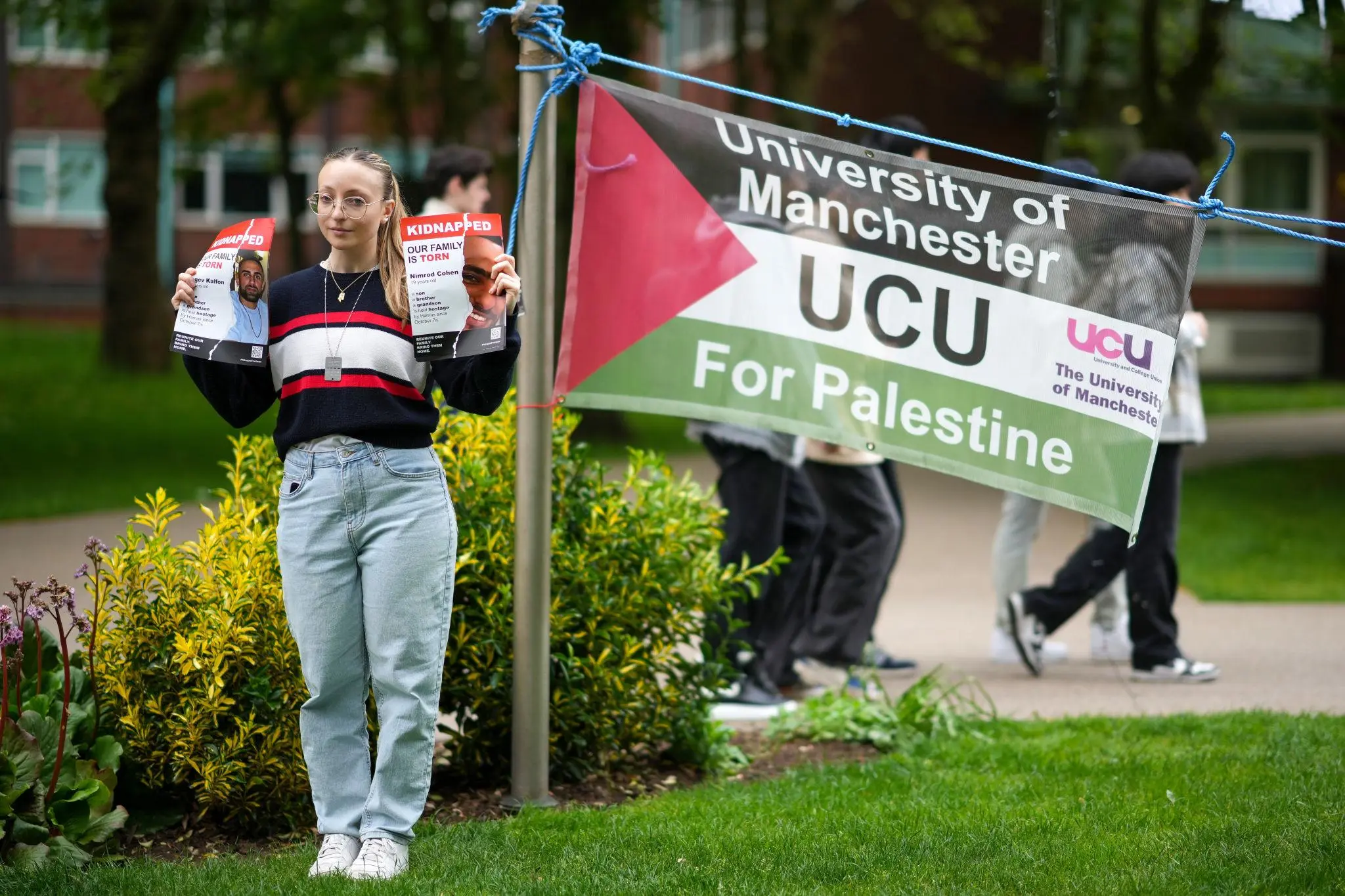
An investigation by Al Jazeera in collaboration with Liberty Investigates has revealed that a number of British universities quietly contracted a private intelligence-linked firm to monitor student activism, including pro-Palestine protests, igniting a major controversy over surveillance, academic freedom, and the limits of institutional power in higher education.
Published on 20 April 2026 and based on Freedom of Information requests sent to more than 150 universities, the investigation found that at least 12 UK institutions paid a total of £443,943 between January 2022 and March 2025 to a company called Horus. The firm, run by former military and intelligence personnel, markets itself as a provider of open-source intelligence and threat analysis, but the reporting indicates that its work extended into systematic monitoring of political activity among students and academics, particularly those involved in protests linked to the war in the Gaza Strip.
The institutions identified as having paid Horus include the London School of Economics, the University of Bristol, Manchester Metropolitan University, the University of Oxford, Imperial College London, University College London, King’s College London, the University of Sheffield, the University of Leicester, the University of Nottingham, and Cardiff Metropolitan University. The University of Manchester separately confirmed commissioning Horus reports on invited speakers discussing geopolitical issues since July 2023. The range of institutions involved, including some of the UK’s most prominent universities, suggests that the use of intelligence-style monitoring was neither isolated nor marginal, but part of a wider institutional response to escalating campus protests.
Monitoring Protest Movements and Digital Activity
According to the investigation, Horus supplied universities with structured intelligence outputs, including daily “encampment updates” during the wave of student protests linked to Gaza. These reports, reportedly costing around £900 per month, were generated using a system referred to as HART, which the company says is capable of harvesting large volumes of publicly available online data and transforming it into detailed analytical briefings.
The scale and nature of this monitoring is one of the most contentious aspects of the revelations. Thousands of social media posts appear to have been collected and analysed, often including material from identifiable students and activists. While universities emphasise that the data was drawn from public sources, critics argue that the aggregation, analysis, and institutional use of this information transforms it into a form of surveillance, particularly when it focuses on political viewpoints.
One example highlighted in the investigation involves the London School of Economics, where a June 2024 briefing included a social media post by a PhD student. Internal correspondence cited in the report shows a security officer forwarding the material while commenting that the university had been “incredibly heavy handed on the protesters,” a remark that has become emblematic of concerns that institutional responses may have exceeded what was necessary for maintaining order.
At the University of Bristol, internal emails revealed payments of at least £8,700 for a bespoke alert system tracking protest activity both on campus and across the surrounding area. The same correspondence indicated that the university provided lists of groups to monitor and explicitly referenced pro-Palestine protests, raising further concerns that specific political movements were being singled out.
Speaker Vetting and the Reach of Counter-Terror Frameworks
The investigation also uncovered the use of Horus in vetting invited speakers under frameworks linked to counter-terror obligations. At Manchester Metropolitan University, the university commissioned a counter-terror threat assessment of Palestinian-American academic Rabab Ibrahim Abdulhadi prior to a scheduled lecture. Horus produced a six-page report analysing her social media activity and allegations circulated by pro-Israel advocacy groups, illustrating how intelligence-style methods were being applied to academic events.
Despite the report, the university ultimately allowed the lecture to proceed after determining there was no evidence linking Abdulhadi to proscribed organisations in the UK. However, the incident highlights how counter-terror frameworks are increasingly intersecting with academic life, particularly in politically sensitive contexts.
This development is closely tied to the UK’s Prevent duty under the Counter-Terrorism and Security Act 2015, which requires universities to assess risks associated with extremism. While institutions often cite Prevent as a justification for enhanced scrutiny, critics argue that its application in cases involving Palestine-related activism risks blurring the line between legitimate security concerns and the policing of dissent.
Institutional Responses and Denials
Several universities responded to the investigation by rejecting the suggestion that they were engaged in improper surveillance and emphasising that their actions were limited to the use of publicly available information.
The University of Sheffield said it used external services to “horizon scan” for major events such as large protests and insisted that it neither shared student data nor instructed contractors to monitor individuals. Imperial College London stated that Horus helped identify potential security risks using publicly available information, while the University of Bristol said its use of the service was intended to support campus safety planning. Manchester Metropolitan University defended its speaker vetting process as a routine risk assessment measure.
Other institutions, including Oxford, UCL, King’s College London, Leicester, and Nottingham, did not respond to requests for comment at the time of publication, a lack of response that has intensified calls for greater transparency and accountability.
Horus itself did not respond to questions from journalists but describes itself publicly as a leading intelligence consultancy founded within Oxford’s security environment. The investigation identifies senior figures associated with the firm, including former British Army officer Colonel Tim Collins, who has publicly attributed pro-Gaza protests to foreign influence campaigns and advocated stricter measures against demonstrators, remarks that critics argue reflect a broader tendency to frame political activism through a security lens.
Legal and Human Rights Concerns
Although the investigation makes clear that there is no evidence the activities uncovered were illegal, the practices described raise significant questions under UK data protection law and human rights frameworks. Under UK GDPR, organisations must ensure that the processing of personal data is lawful, necessary, and proportionate, and must have a clear legal basis.
A central issue is that publicly available data remains protected under data protection law, meaning that large-scale monitoring and profiling of individuals’ political views may require additional safeguards such as Data Protection Impact Assessments. Legal experts emphasise that organisations must demonstrate that such monitoring is necessary and that no less intrusive alternatives exist.
The implications extend beyond privacy into freedom of expression. Universities have a legal duty to protect lawful speech, and critics argue that systematic monitoring of activism risks creating a chilling effect, discouraging students and academics from engaging in debate on contentious issues.
The UN Special Rapporteur on freedom of assembly, Gina Romero, warned that the use of AI-driven monitoring tools in this context raises “profound legal concerns” and could contribute to a “state of terror” among student activists. Jo Grady, General Secretary of the University and College Union, described the revelations as “shameful,” accusing universities of effectively spying on their own students.
A Broader Pattern of Surveillance and Repression
The findings align with a wider pattern of increasing restrictions on Palestine solidarity activism in the UK. The European Legal Support Centre has documented 964 verified incidents of repression between January 2019 and August 2025, affecting students, academics, and teachers. Previous reporting by Liberty Investigates has highlighted cases in which universities shared information with police or took disciplinary action against protesters, suggesting that the use of external intelligence firms may represent an escalation in institutional responses.
For many observers, this broader context is essential, as it indicates that the Horus contracts were not an isolated development but part of a growing trend toward treating political dissent as a matter of security.
Fallout and Ongoing Developments
In the immediate aftermath of the investigation, there has not yet been a comprehensive response from the UK government, but the revelations have begun to generate wider scrutiny across media, legal, and academic circles. Civil liberties organisations are expected to press for regulatory review, particularly by the Information Commissioner’s Office, while universities may face increasing pressure to disclose the full extent of their relationships with external intelligence providers.
The absence of responses from several major institutions has also become a focal point, with campaigners arguing that silence risks reinforcing concerns about opaque decision-making. At the same time, universities are likely to continue defending their actions as necessary measures taken in a period of heightened tension and legal obligation.
The controversy ultimately raises a fundamental question about the role of universities in a politically charged environment. Institutions argue that they are balancing safety and compliance with their duty to protect students and staff, while critics contend that the evidence points to a shift toward surveillance of dissent that could have lasting consequences for academic freedom. As further information emerges and additional responses are sought, the Horus investigation is likely to become a defining test of how far universities can go in monitoring their communities without undermining the principles they are meant to uphold.