

Senior Palestinian resistance leaders have accused the Trump administration’s so-called “Board of Peace” of attempting to rewrite the terms of the Gaza ceasefire agreement by imposing new demands for the disarmament of Hamas and other resistance groups while Israeli forces continue occupying large parts of the Gaza Strip.
In interviews conducted in Istanbul with senior Hamas and Palestinian Islamic Jihad officials, resistance leaders told Drop Site News that the ceasefire signed in Sharm El-Sheikh in October 2025 never included any agreement requiring Palestinian factions to surrender their weapons before reconstruction or Israeli withdrawal could begin.
The controversy centers on a newly proposed “15-point roadmap” reportedly presented in April by Nickolay Mladenov, the Trump-appointed “High Representative for Gaza.” According to Palestinian negotiators, the proposal conditions reconstruction aid and Israeli withdrawal on the total disarmament of Hamas and other resistance movements.
Hamas official Osama Hamdan warned that the plan amounted to an attempt to force Palestinians into political surrender while Israel maintained military dominance over Gaza.
“The aim is to end the Palestinian presence in the Gaza Strip, not merely occupation,” Hamdan said, arguing that continued pressure could trigger renewed armed conflict rather than stability.
Mohammed Al-Hindi, co-founder of Palestinian Islamic Jihad and one of the negotiators involved in the ceasefire talks, said Palestinian factions had fulfilled their obligations under the first phase of the agreement, including prisoner exchanges, while Israel had failed to meet key commitments involving humanitarian access, reconstruction and military withdrawal.
Resistance officials claim Israeli forces have continued military operations despite the ceasefire, with hundreds of Palestinians reportedly killed since the agreement was signed. They also accuse Israel of blocking essential supplies, reconstruction materials and fuel from entering Gaza while expanding its military footprint across large areas of the territory.
The new tensions have unfolded alongside a series of targeted Israeli strikes against Hamas leadership figures and their families. Hamas officials alleged that recent assassinations and attacks on negotiators’ relatives were intended to pressure the movement during ongoing talks over the future of Gaza.
The “Board of Peace,” backed by the United States and endorsed by the UN Security Council in late 2025, has been presented by Washington as a mechanism to oversee Gaza’s reconstruction and political transition following the war. However, Palestinian leaders and critics of the initiative argue the body has effectively adopted Israeli conditions for ending the conflict.
Former Israeli negotiator Daniel Levy described the initiative as part of a broader strategy to consolidate permanent Israeli control over Gaza while sidelining Palestinian political rights. He argued the roadmap places the entire burden on Palestinian factions while offering no enforceable guarantees regarding Israeli withdrawal or accountability.
Mladenov has publicly defended the proposal, insisting the roadmap is based on “reciprocity” and monitored implementation steps designed to rebuild trust between Israelis and Palestinians. But Hamas negotiators reject that characterization, arguing that Israel continues to enjoy military freedom while Palestinians are asked to surrender their only leverage.
Senior Hamas negotiator Basem Naim said any future discussion about weapons could only occur within the framework of a political settlement that included Palestinian sovereignty and statehood.
“If they want to get rid of the resistance or the arms, we have to get rid of the occupation,” Naim said.
The dispute over disarmament has become one of the most contentious obstacles in ongoing negotiations as international mediators shuttle between Cairo, Doha and Istanbul attempting to prevent a return to full-scale war. Hamas and Islamic Jihad leaders maintain that no Palestinian faction would accept unconditional disarmament while Gaza remains occupied and under siege.
Analysts cited in the report warned that the current deadlock could pave the way for renewed Israeli military escalation or the fragmentation of Gaza into separate administrative zones controlled by Israel and international authorities. Israeli officials have reportedly discussed plans that would divide the territory into areas receiving reconstruction aid and areas remaining isolated under siege conditions.
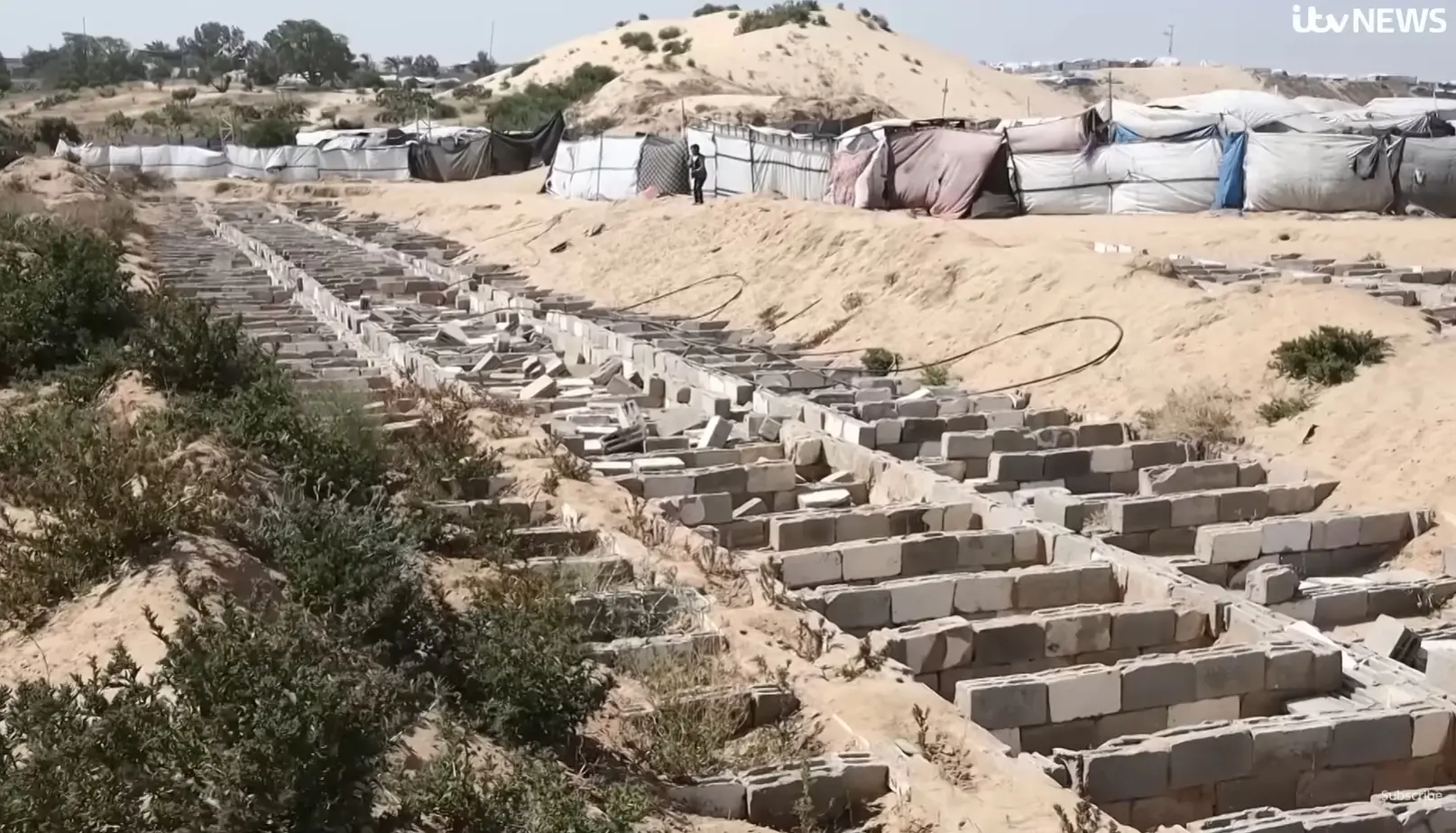
Meanwhile, the humanitarian crisis in Gaza remains severe. Large portions of the territory remain devastated, with many Palestinians still living in makeshift shelters amid shortages of medical supplies, fuel and reconstruction equipment. International reconstruction pledges totaling tens of billions of dollars have reportedly seen only limited disbursement so far.
Despite mounting pressure, Palestinian resistance leaders insist that disarmament without a political solution is impossible. Hamdan argued that the broader goal of the U.S.-Israeli strategy was to establish permanent regional dominance rather than achieve peace.
“The idea of disarmament is not truly about peace,” he said. “It is about making Israel dominant in the region through force.”