


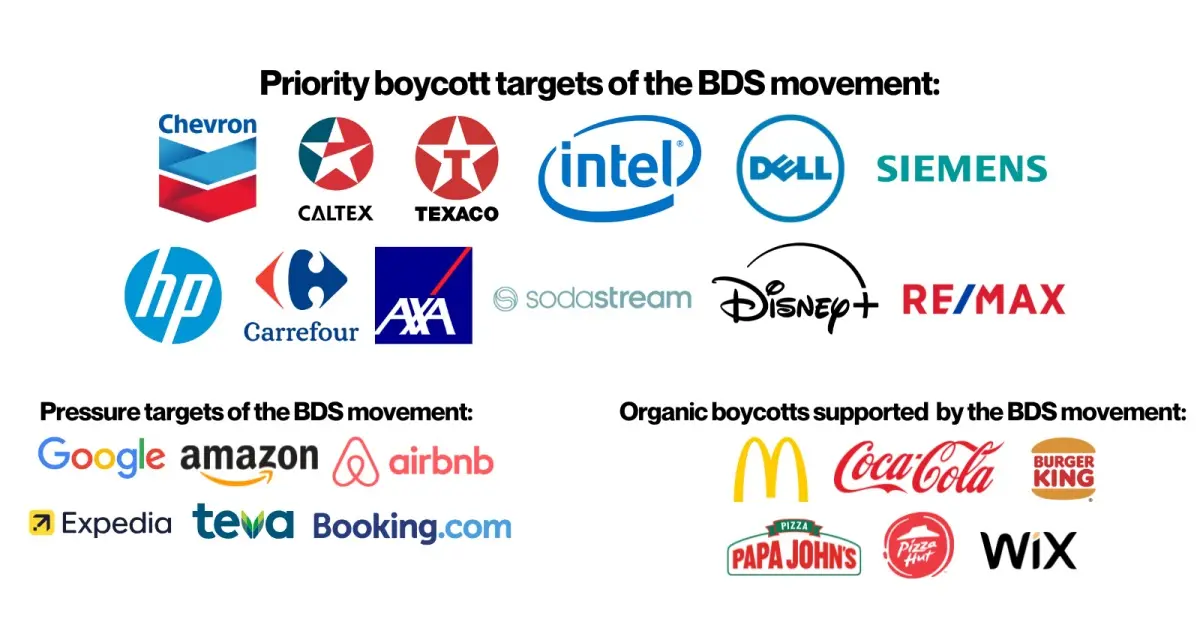
Since Israel’s 2023 war on Gaza, the political landscape of global consumerism has shifted. Boycotts that once belonged to the realm of dedicated activists suddenly erupted into everyday life, sweeping through high streets, supermarkets, universities and cultural venues. A new form of public pressure — visible, decentralised and technologically enabled — emerged almost overnight. What had long been a specialised tactic of human-rights groups transformed into a mass movement powered by public outrage and digital tools that lowered the barrier to participation to almost nothing.
At the centre of this new consciousness sits the Boycott, Divestment and Sanctions movement — BDS — a Palestinian-led initiative launched in 2005 and modelled on the global campaign against apartheid South Africa. Its goals remain consistent: end the occupation of Palestinian territories, guarantee equal rights for Palestinian citizens of Israel, and uphold the right of return for refugees. For nearly two decades, BDS made steady progress within universities, churches, unions and municipal bodies. But the Gaza war pushed it into a far wider public realm, encouraging millions to reassess the moral weight of their everyday spending.
Digital Boycotts: When Solidarity Lives in Your Pocket
A central reason for this surge is technology. Boycotts once required specialist knowledge: tracing supply chains, decoding corporate subsidiaries, and keeping updated lists of which brands were implicated in settlement building or military procurement. Today, apps like No Thanks compress that into a single gesture. A user scans a barcode, and within seconds sees whether a product is linked to companies profiting from the occupation or from supplying the Israeli military.
What makes these tools unprecedented is their seamlessness. The app’s database is continuously updated with global research and crowdsourced monitoring, creating an ecosystem of grassroots intelligence. Products ranging from dates and citrus fruits to beauty brands and snack foods can now be vetted instantly.
This effortless merging of activism and routine has produced a new category of political participant: the everyday consumer-activist. People who may never join a street demonstration can now engage directly in a form of economic refusal at the tills of their local supermarket. Boycotting is no longer a niche campaign — it has become a behaviour pattern.
Israel’s Counter-Offensive: Laws, Contracts and the Criminalisation of Boycotts
The expansion of boycott culture has provoked an aggressive counter-response. Israel and its allies have worked to curb BDS through legal, political and diplomatic pressure — much of it embedded in regulatory frameworks rather than public debate.
In the United States, dozens of states have passed laws forcing public contractors to certify that they do not boycott Israel. These requirements appear in contracts for teachers, engineers, healthcare providers and disaster-relief teams. Several public-sector workers have lost opportunities or employment after refusing to sign anti-boycott pledges, turning government procurement into a tool of ideological policing.
Federal grants have begun adopting similar requirements, further tightening the link between public funding and political conformity. Civil-rights groups argue this undermines constitutional protections and could easily be turned against any dissenting movement — from climate divestment to anti-sweatshop campaigns.
Israel itself bars entry to foreign nationals who publicly support BDS, routinely denying access to activists, academics and even elected lawmakers. The effort extends beyond borders: lobbying campaigns in Europe have sought to portray BDS as discriminatory, pushing governments to adopt policies restricting ethical boycotts by public institutions.
In the UK, new legislation would prevent councils, universities and pension funds from making procurement or investment decisions that express moral disapproval of a foreign state — with Israel singled out for explicit protection. Critics warn it will suffocate not only Palestine-related campaigns but any ethical investment strategy, from fossil fuel divestment to Uyghur-labour supply-chain exclusions.
What Boycotts Have Achieved — and What It Has Cost Israel
The legal crackdown is not simply defensive symbolism. BDS has already inflicted tangible costs — reputational, economic, and diplomatic — on Israel and companies tied to its policies.
Corporate and institutional losses
- Veolia, once a major operator of infrastructure projects in Israel, withdrew entirely after sustained campaigning. Analysts estimated it lost over £7 billion in cancelled contracts worldwide as public bodies refused to partner with a company linked to settlement rail lines and waste services.
- G4S’s divestment from its Israeli subsidiary followed years of public pressure regarding its role in prisons and checkpoints. While precise figures are private, market analysts estimated the reputational damage and contract withdrawals amounted to hundreds of millions in lost business globally.
- Orange Telecom ended a high-profile branding partnership with an Israeli company implicated in settlement activity, costing Israel a major international corporate endorsement.
- General Mills, under pressure for operating in the Atarot settlement, shuttered its Pillsbury factory. The move dented the broader narrative that major US food brands consider Israel a stable, risk-free investment zone.
Consumer boycotts with material impact
Knowledge of brands’ perceived complicity has led to marked drops in sales for several high-street companies in multiple countries. Analysts estimate that since 2023, consumer boycotts have cost Israeli exporters hundreds of millions of pounds, with agricultural products — especially dates, avocados and citrus — hit particularly hard.
The Co-op Revolt in the UK
One of the earliest, clearest examples of institutional boycott success came from the Co-operative Group in the UK, which announced it would no longer stock produce from Israeli agricultural companies operating in illegal settlements. The Co-op, the UK’s fifth-largest supermarket at the time, also suspended sourcing relationships with companies known to be involved in Palestinian land confiscation.
This decision was a watershed moment:
- It signalled that mainstream retailers could adopt ethical procurement lines without political collapse.
- It caused immediate disruption to Israeli settlement exporters, particularly in the Jordan Valley, where Co-op contracts had been significant.
- It encouraged local councils, student unions and church groups to expand their own boycott criteria.
Since the Gaza war, smaller independent retailers and food wholesalers across the UK and Europe have followed similar practices, often quietly, by delisting settlement-sourced goods.
Macro-level costs
Taken together, the impact is measurable:
- Israel’s Ministry of Finance has privately estimated that long-term boycott activity — including withdrawn contracts, lost agricultural markets, reduced investment interest, and international reputational damage — could cost the Israeli economy £1–2 billion annually if current trends continue.
- Analysts note that even when a company does not fully divest, the reputational risk associated with operating in Israeli settlements raises borrowing costs, complicates international partnerships, and triggers stricter due-diligence demands from investors.
- Tourism-related losses since 2023 — fuelled partly by boycott calls and partly by global concerns over political instability — have been estimated in the billions of pounds, further affecting Israel’s broader economic ecosystem.
The Future: A Clash Between Grassroots Power and State Restrictions
The coming years will be shaped by a contest between two opposing forces: the expansion of grassroots digital mobilisation and the construction of legal barriers designed to neutralise it.
On the one hand, apps, social networks and decentralised research groups are enabling ordinary consumers to act collectively with unprecedented coordination. Boycott culture has taken deep root among younger generations, for whom ethical consumption is second nature.
On the other hand, governments are erecting structural protections for Israel that threaten to limit public-sector autonomy and democracy itself. If councils, universities and pension funds are legally prohibited from acting on ethical principles, then citizens lose one of their most meaningful levers for influencing global behaviour.
The question is not whether boycotts will continue — they already have. The question is whether states can suppress them without eroding fundamental democratic freedoms. What is clear is that boycotts have entered the mainstream. They are now part of a global vocabulary of resistance, woven into daily choices, quiet refusals and small acts of solidarity.
As long as technology continues to place political decisions in the palms of ordinary people, the power of boycott — subtle, decentralised and cumulative — will remain one of the most potent challenges to a system of occupation that depends on global complicity to survive.