


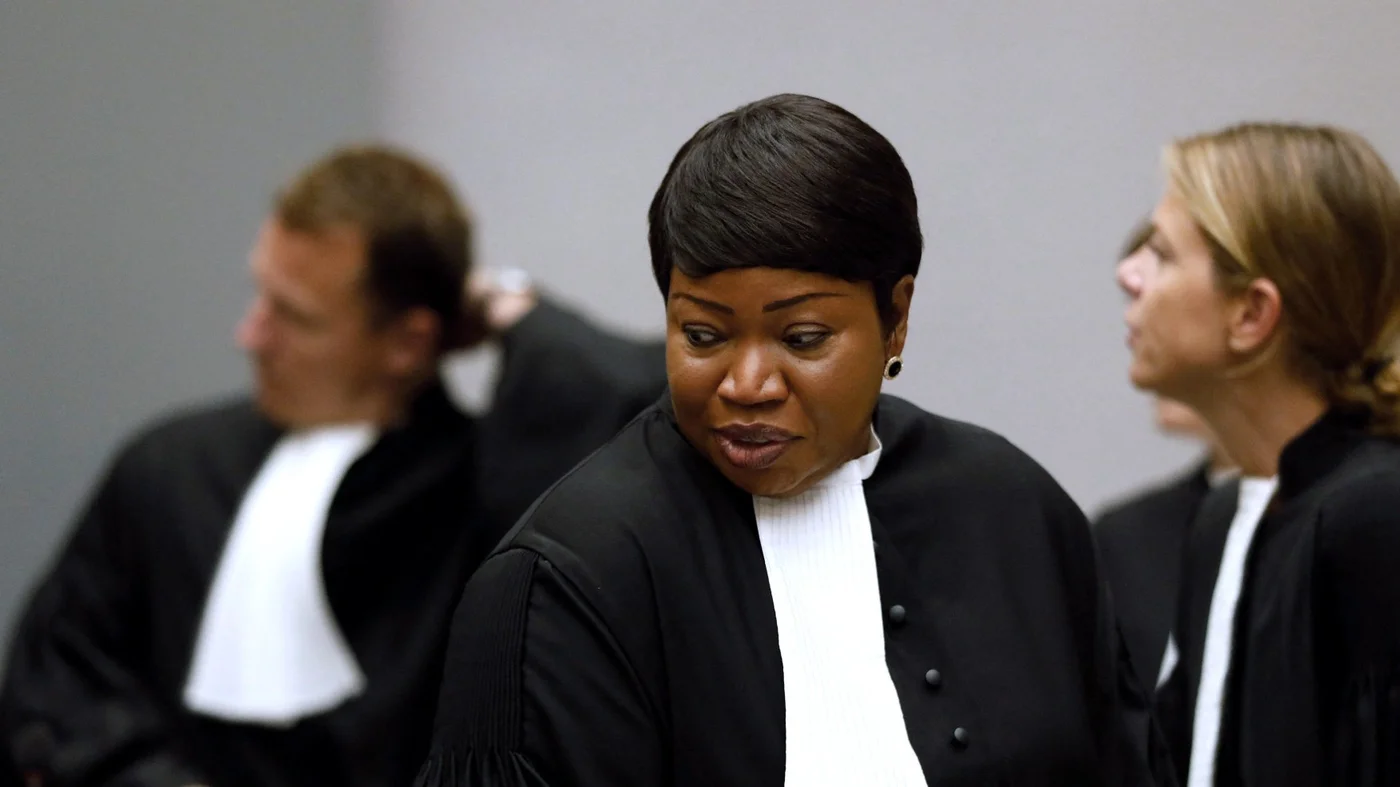
Fatou Bensouda claims Israeli intelligence campaign sought to intimidate her as scrutiny intensifies over international courts handling of Gaza
Former International Criminal Court prosecutor Fatou Bensouda has alleged that Israel’s intelligence services mounted a campaign of intimidation and threats against her after she opened an investigation into alleged war crimes in occupied Palestine, reigniting fierce debate over whether international justice institutions have been systematically pressured whenever Israel faces legal scrutiny.
In a revealing interview with Al Jazeera, Bensouda said former Mossad chief Yossi Cohen personally pressured her to abandon the ICC’s Palestine investigation and warned that pursuing the case could endanger her family.
“What was clear was that they did not want the investigations into the situation in Palestine to go on,” Bensouda said. “That’s the bottom line.”
The allegations are among the most explosive ever made by a former senior international prosecutor and come amid mounting criticism of both the International Criminal Court and the International Court of Justice over their handling of Israel and Palestine.
According to Bensouda, unidentified men arrived at her home in The Hague shortly after she opened a preliminary examination into Palestine in 2015. She said they handed her an envelope containing $500 and implied it came from someone she had helped in the past. She interpreted the incident as a message designed to demonstrate that those behind it knew where she lived.
“They came directly to my house,” she said. “I got the message that they’re sending.”
Bensouda said Dutch investigators later traced phone numbers connected to the visitors back to Israel, though she claimed no meaningful action was taken. “I felt left alone. I felt unsupported,” she said of the Dutch authorities’ response.
She also confirmed longstanding reports that Cohen warned her Israel could “take care” of her if the investigation continued, remarks she understood as threats against both herself and her family.
The allegations echo a 2024 investigation published by The Guardian alongside +972 Magazine and Local Call, which alleged that Cohen personally led a covert campaign to derail the ICC’s Palestine investigation.
The Palestine case has long represented one of the most politically explosive matters ever confronted by the ICC. Israel rejects the court’s jurisdiction entirely, arguing that Palestine is not a sovereign state and therefore cannot confer jurisdiction to The Hague.
But the ICC moved forward regardless, eventually issuing arrest warrants in 2024 against Israeli Prime Minister Benjamin Netanyahu and former Defence Minister Yoav Gallant over alleged war crimes connected to Gaza.
For Israel and its allies, the prospect of senior Israeli leaders facing international prosecution represented an existential legal and diplomatic threat.
Bensouda’s claims also revive scrutiny of the United States’ unprecedented sanctions campaign against ICC officials during the first administration of Donald Trump.
In 2020, Washington imposed sanctions on Bensouda and senior ICC officials after the court pursued investigations into alleged war crimes committed by US forces in Afghanistan and Israeli forces in Palestine. The sanctions reportedly froze financial assets and disrupted her banking and mortgage arrangements.
“People just think that when you’re sanctioned … you can no longer go to the US. But it goes far beyond that,” Bensouda said.
Her son’s bank account in The Gambia was allegedly blocked as well. She also described surveillance directed at her husband, including photographs and recordings, which she believed were connected to the broader intimidation campaign.
The sanctions were lifted after Joe Biden entered office in 2021, but Trump later revived sanctions against ICC officials following his return to power.
The revelations have renewed wider criticism that international legal institutions bend under immense political pressure whenever Israel is accused of serious violations of international law.
That criticism has increasingly focused not only on the ICC but also on the ICJ, where a separate controversy erupted around Ugandan judge Julia Sebutinde.
As previously reported, Sebutinde triggered international outrage after publicly declaring from the pulpit of Kampala’s Watoto Church that “The Lord is counting on me to stand on the side of Israel” while serving as vice-president of the ICJ during South Africa’s genocide case against Israel.
The remarks stunned legal observers because Sebutinde had already emerged as Israel’s strongest defender inside the ICJ.
In January 2024, when the court found it “plausible” that Israel was committing genocide in Gaza and ordered emergency measures, Sebutinde was the only judge among 17 to dissent from all of them. She later dissented again from further rulings against Israel and opposed the ICJ’s July 2024 advisory opinion declaring Israel’s occupation unlawful.
Critics argued her statements demonstrated not merely political bias but ideological and theological commitment.
The controversy deepened further after allegations emerged that large sections of Sebutinde’s dissenting opinion had been plagiarized from pro-Israel advocacy sources, including material linked to former US official Douglas Feith, Wikipedia and Christian Zionist writings.
Political scientist Norman Finkelstein has argued that both Bensouda and Sebutinde represent different manifestations of what he describes as systemic corruption within international justice institutions whenever Israel faces accountability.
In his books I Accuse! and Gaza’s Gravediggers, Finkelstein accused Bensouda of failing to pursue Israel aggressively enough during the 2010 Mavi Marmara flotilla killings, while condemning Sebutinde for using the authority of the ICJ to shield Israel from genocide allegations.
For critics of Israel, Bensouda’s new allegations reinforce claims that Western powers and allied intelligence services systematically interfere with international legal bodies to prevent accountability.
For supporters of Israel, however, the ICC and ICJ remain politicized institutions unfairly singling out the Jewish state while ignoring abuses elsewhere.
The broader implications extend beyond Israel and Palestine. Legal scholars warn that if international prosecutors and judges can be intimidated, sanctioned or politically pressured without consequence, the authority of global courts may erode entirely.
The ICC and ICJ possess no military force or police powers. Their authority depends almost entirely on credibility, impartiality and international trust.
Bensouda warned that those foundations are now under attack.
“There will be attempts to make the court disintegrate and fade away,” she said. “But I know that there are still people, institutions and countries that want justice.”