


How a war-crimes accountability campaign backed by the only Jewish leader of a British political party was recast, across four British newspapers, as a Nazi-style plan to list Jews for extermination.
Even by the standards of the British press, the past fortnight has marked a new low. Within hours of a campaign letter landing on the desks of two Cabinet ministers, the country’s commentators reached, almost in unison, for the darkest analogy in living memory.
Stephen Pollard, the Telegraph columnist and former editor of the Jewish Chronicle, told readers that Zack Polanski “wants a Jew register” and asked what could be more sinister. Camilla Tominey, associate editor of the same paper, reminded her followers that Polanski leads a political party “calling for a list of Jews to be compiled”. Hadley Freeman, now of The Sunday Times, mused – spitballing, she said – about whether such Jews might be made to wear a star of David. Zac Goldsmith, the former Conservative minister whose 2016 London mayoral campaign was widely condemned as racially divisive, called Polanski a disgusting piece of human trash and wondered, beneath five vomiting emojis, how the man could live with himself.
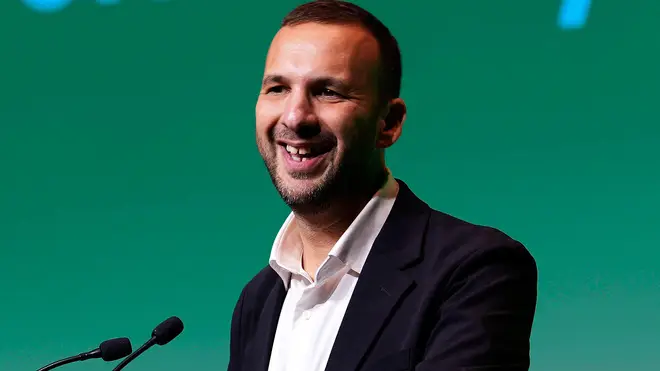
Polanski is the leader of the Green Party of England and Wales. He is also the only Jewish leader of a major political party in the country. The suggestion that he is drawing up a list of Jews for identification – an image deliberately yoked to the machinery of the Holocaust – is not, on any honest reading, what the campaign says.
So what does it say? The letter, organised by the investigative outlet Declassified UK and the International Centre of Justice for Palestinians and addressed to Home Secretary Shabana Mahmood and Foreign Secretary Yvette Cooper, makes three requests. It asks the Government to collect data on British nationals who have served in the Israel Defence Forces since October 2023. It asks that those returning from Israel be subject to secondary screening at ports of entry where necessary. And it asks for robust war-crimes investigations in line with domestic and international law. The campaign carries the title “Nobody wants to live next to a war criminal”.
“This is absolutely incredible,” John McEvoy, chief reporter at Declassified UK, told the broadcaster Owen Jones in an interview this week. He described leading British columnists “deliberately and cynically misconstruing” the campaign in order to suggest that the only Jewish leader of a major UK party was, in effect, bringing about a second Holocaust.
The factual ground beneath the letter is sturdy. Earlier this year Declassified revealed that more than 2,000 Britons have served in the IDF since October 2023 – a figure obtained not from any British department but from a Freedom of Information request submitted to the Israeli military by a lawyer in Israel. The Home Office, the Foreign Office and the Ministry of Defence collect no such data. A Briton who leaves to fight in Gaza and returns is asked nothing at the border, McEvoy notes, and no record of the journey is kept.
The campaign rests on a legal premise as much as a moral one. In January 2024 the International Court of Justice found it plausible that Israel was committing genocide in Gaza and placed all states on notice; a United Nations commission of inquiry has since concluded that genocide was being committed. The Genocide Convention, in its full title the Convention on the Prevention and Punishment of the Crime of Genocide, obliges signatory states not merely to punish the crime but to prevent it. Allowing nationals to travel to participate in it, McEvoy argues, is the precise inverse of that duty. Israel denies committing war crimes or genocide and says it takes care to minimise civilian casualties.
The irony McEvoy presses hardest is the one his accusers seem least able to see. The widely used IHRA working definition of antisemitism – itself criticised for chilling legitimate scrutiny of Israel – lists, among its own examples, the holding of Jews collectively responsible for the actions of the state of Israel. It is the campaign’s critics, he contends, who conflate the IDF and its potential war criminals with Jews everywhere. “They are deeply anti-Semitic comments,” he said of the responses from Freeman and others.
Set against the official inertia, the contrast in British conduct is stark. The Metropolitan Police’s war-crimes unit closed its scoping exercise into ten British nationals accused of crimes in Gaza, citing no realistic prospect of conviction; the ICJP’s dossier of identifiable suspects went, predictably, nowhere. Yet over the same period more than 3,000 people – among them elderly vicars, pensioners and disabled protesters – have been arrested under terrorism legislation for holding placards, after Palestine Action became the first civil-disobedience group in Britain to be proscribed as a terrorist organisation. Next week, McEvoy noted, the first activists face possible sentencing as terrorists for what the court found to be criminal damage.
The asymmetry extends to the border itself. Britain has barred foreign commentators on the ground that their presence was not conducive to the public good, while waving through dual nationals returning from a war zone with no questions asked. “If you’re a retired vicar holding a placard opposing genocide, you get arrested,” Jones observed. “If you go and shoot some kids in the face, no consequences.”
Behind the row sits the larger architecture of British complicity that Declassified has spent years documenting. A 2020 military agreement between the MoD and the IDF was confirmed last year to be ongoing. The Government’s much-trumpeted suspension of arms export licences carved out components for the F-35, allowing British parts to continue reaching Israeli jets. And the sanctions on Smotrich, the finance minister, were applied to him personally but not to his ministry – which retains significant control over Pearson Engineering, the Newcastle arms firm owned by Israel’s state company Rafael. In August 2025, two months after Smotrich was sanctioned, the MoD awarded Pearson a contract worth more than £10m. “We are in effect funding Smotrich’s ministry while the Government pretends to sanction him,” McEvoy said. The arms suspensions, he argued, were “cover for business as usual”.
Where states will not act, individuals increasingly do. The Hind Rajab Foundation and lawyers across several jurisdictions have begun lodging private arrest applications under universal-jurisdiction laws, which allow the gravest crimes – genocide, torture – to be prosecuted wherever the suspect is found. Such moves, McEvoy stressed, are a symptom of governmental failure, not a substitute for it.
The campaign’s opponents are unabashed. Russell Langer of the Jewish Leadership Council called the monitoring of dual nationals “particularly disturbing” at a time of rising antisemitism; the Board of Deputies of British Jews described it as an attempt to demonise Israelis; the Conservative chairman Kevin Hollinrake demanded Polanski withdraw his name. They speak as though the proposition under discussion were the registration of a faith, rather than the screening of returning combatants.
For all the fury, the letter is travelling. It has gathered more than 19,000 signatures and the backing of over 60 prominent figures – the human-rights barrister Michael Mansfield, the genocide scholar Martin Shaw, the former British Army general Charlie Herbert, the anti-apartheid campaigner Andrew Feinstein, and the MPs Jeremy Corbyn, Diane Abbott, John McDonnell and Zarah Sultana among them. The idea, first floated by the Hague Group of some forty states, has already been raised in the Australian parliament. The bar, as Jones put it, is on the floor: a basic, reasonable request not to live next door to a war criminal.