


Leaked State Department cable reveals explicit threats to revoke Palestinian diplomats’ visas and freeze vital tax revenues unless they abandoned the UN candidacy by May 22. They withdrew two days later. Now, as Gaza’s post-ceasefire death toll breaches 1,000, the world sees exactly why Washington was so desperate to deny them the podium.
In a brazen act of diplomatic coercion, the Trump administration forced the Palestinian Authority to withdraw its candidacy for a senior United Nations vice-presidency by threatening to revoke the visas of the entire Palestinian UN delegation and freeze millions of dollars in vital tax revenues.
The explicit threats, contained in a leaked U.S. State Department cable dated May 19, gave the Palestinians a mere 72 hours to comply — or face “consequences.” By May 21, the Palestinian mission had capitulated.
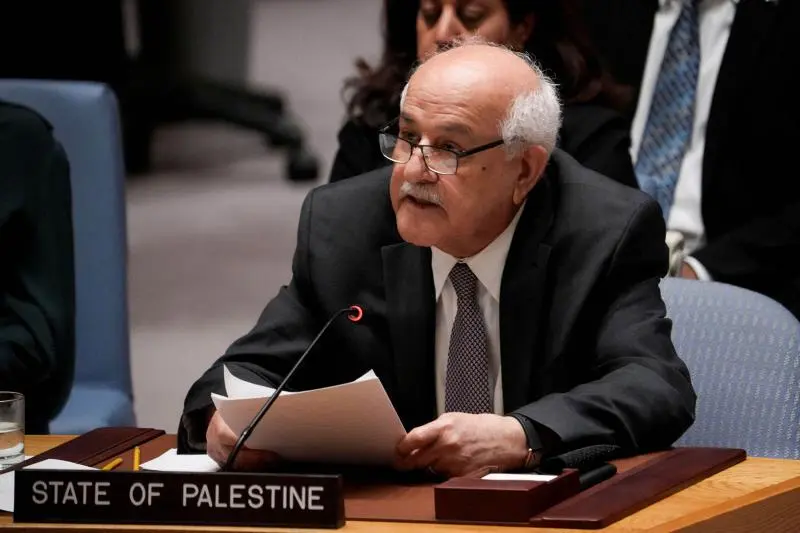
The timing and motivation for Washington’s heavy-handed pressure are now unmistakably clear. U.S. diplomats were terrified that if Palestinian Ambassador Riyad Mansour were elected to the vice-presidency of the General Assembly, he could be deputised to preside over high-profile sessions on the Middle East — and expose Israel’s ongoing military campaign in Gaza to unfiltered global scrutiny.
Just weeks after that diplomatic silencing, the very catastrophe Washington sought to obscure has reached a grim milestone. As of today, June 21, the so-called U.S.-brokered “ceasefire” that took effect on October 10, 2025, has failed to stop the killing. At least 1,012 Palestinians have been killed by Israeli fire since the truce began, including 265 children — an average of one child murdered every single day. More than 3,200 others have been wounded.
‘Consequences Will Follow’: The Explicit Threats
The leaked cable, marked “sensitive but unclassified” and first obtained by NPR, instructed U.S. diplomats at the embassy in Jerusalem to deliver a formal demarche to Palestinian Authority leaders. The deadline was May 22.
The cable laid out two specific coercive measures:
- Visa revocation: The administration threatened to revoke the visas of members of the Palestinian UN delegation in New York, effectively deporting their diplomats and barring them from the UN headquarters — a move that would cripple their ability to function on the world stage. “It would be unfortunate to have to revisit any available options,” the cable stated ominously, referencing a prior decision to waive visa restrictions for mission staff.
- Financial strangulation: Diplomats were instructed to remind the Palestinians that they would make no progress in recouping tax and customs revenue owed to them but withheld by Israel. These funds, which account for approximately 60% of the Palestinian Authority’s budget, have been largely blocked since the start of the Gaza war in October 2023. The threat was clear: drop the UN bid, or remain financially crippled.
The cable left no room for ambiguity. “To be clear, we will hold the PA responsible if the Palestinian delegation does not withdraw its VPGA candidacy, and consequences will follow,” it stated.
Why Washington Was So Desperate
The State Department’s fear was not abstract. The cable explicitly noted that Mansour “has a history of accusing Israel of genocide” and that his bid “fuels tension” and undermines President Trump’s so-called “peace” plan for Gaza.
While the vice-presidency is a procedural role, those elected can be deputised to preside over General Assembly sessions. As the cable warned: “In a worst-case scenario, the next PGA [President of the General Assembly] might assist the Palestinians in presiding over high-profile sessions related to the Middle East or during UNGA81 high-level week.”
Washington was determined to prevent Mansour — who has consistently used every UN platform to detail Israel’s bombardment of Gaza, its systematic destruction of civilian infrastructure, and the targeting of aid workers and journalists — from gaining even that procedural foothold.
By May 21, the Palestinians had bowed to the pressure. Lebanon was swiftly nominated to fill the vice-presidential seat allocated to the Asia-Pacific group. According to diplomatic sources, the Palestinian delegation also pledged, through an Arab intermediary, that Mansour would refrain from running for any vice-presidential position for the next two years — widely interpreted as a surrender to the duration of President Trump’s current term.
Gaza: The Horror Washington Wanted Hidden
The reason for this diplomatic bullying is now written in the blood of Gaza’s children.
The “ceasefire” agreed upon in October 2025 was supposed to pause the conflict. Instead, Israeli forces have expanded their occupation to control more than 60% of Gaza’s territory, demolishing remaining buildings and forcibly displacing residents. Nearly the entire population of 2 million people, many displaced multiple times, now live in a tiny, fetid strip along the coast in makeshift tents and shattered structures.
According to Gaza’s Government Media Office, Israeli forces have committed 3,338 documented violations of the ceasefire agreement since October 10. These violations have resulted in the 1,012 martyrs, 3,208 wounded, and 100 detainees taken from their homes.
Aid has been systematically weaponized. Only 54,023 aid trucks have entered Gaza out of the 150,600 promised — a compliance rate of just 36%. Only 7,417 travelers have been allowed to cross through the Rafah border out of 20,600 stipulated in the agreement.
On Saturday alone — June 21 — Israeli strikes killed at least 11 people, including four members of the same family in Gaza City’s Sabra neighbourhood. A separate strike killed a Palestinian journalist working for Al Jazeera in the Bureij refugee camp. The Israeli military claimed he was a “Hamas terrorist”.
‘Extremely Rare’ and ‘Counterproductive’
The U.S. bullying drew sharp condemnation from former diplomats.
Hady Amr, who served as a senior State Department official on Palestinian affairs under both the Obama and Biden administrations, called the threat “extremely rare” and “counterproductive“.
“Short of extreme situations like Russian espionage or election interference, using visa restrictions as you are reporting is extremely rare,” Amr told NPR. “Generally, it’s counterproductive because you need diplomats to work out problems between countries and by expelling diplomats, you’re undermining not only their ability to solve problems, but the abilities of the United States as well.”
The Israeli ambassador to the UN, Danny Danon, celebrated the Palestinian withdrawal, calling the initial candidacy “yet another attempt to turn the UN General Assembly into a political circus against Israel.”
Palestinian Authority President Mahmoud Abbas’s office declined to comment on the withdrawal.
‘A Cruel and Deadly Illusion’
As the diplomatic silencing takes effect, the humanitarian catastrophe in Gaza deepens by the hour.
UNICEF spokesperson James Elder told reporters in Geneva on June 19 that the Gaza ceasefire has become “a cruel and deadly illusion”.
“These children were not killed in a warzone. They were killed in their homes. They were killed in their schools. They were killed playing football. They were killed fishing. They were shot, bombed and struck by quadcopters,” Elder said. “While the world continues to speak the language of ceasefire, families in Gaza continue to bury their children.”
“If a child is being killed every day, surely the debate is no longer about the quality of the ceasefire. It is about the credibility of calling it one.”
Efforts to move to the second phase of the ceasefire — which would require Israeli troops to withdraw from Gaza — remain completely deadlocked. Nickolay Mladenov, Trump’s Board of Peace envoy for Gaza, held talks this week in Cairo with mediators, but Hamas has shown no intention of surrendering its arms, while Israeli Prime Minister Benjamin Netanyahu has made clear Israel aims to seize at least 70% of the Gaza Strip.
Mladenov warned the UN Security Council on Thursday that the deteriorating status quo risks becoming “permanent.” “Another generation growing up in tents in fear, with despair as the most rational thing for them to feel,” he said.
A Pattern of Silencing
The May threats were not an isolated incident. In September 2025, the Trump administration had already denied visas to top Palestinian officials, including President Abbas, barring them from attending the UN General Assembly.
The pattern is unmistakable: Washington will use its privileged position as host of UN headquarters to weaponise visas and financial aid against Palestinian diplomacy. The goal is not peace — it is silence.
But silencing the messenger does not erase the message.
The Palestinians may have been forced to withdraw their UN candidacy. Their diplomats may face visa revocation. Their treasury may be starved of funds. Yet the truth about Gaza — about the children buried under rubble, the families killed in their homes, and a “ceasefire” that has become a death sentence for more than a thousand — cannot be held hostage by diplomatic threats forever.
As the death toll on the ground continues to rise, the world is left asking: What was Washington so afraid the Palestinians would say? And why does the United States believe that silencing them is more important than saving them?