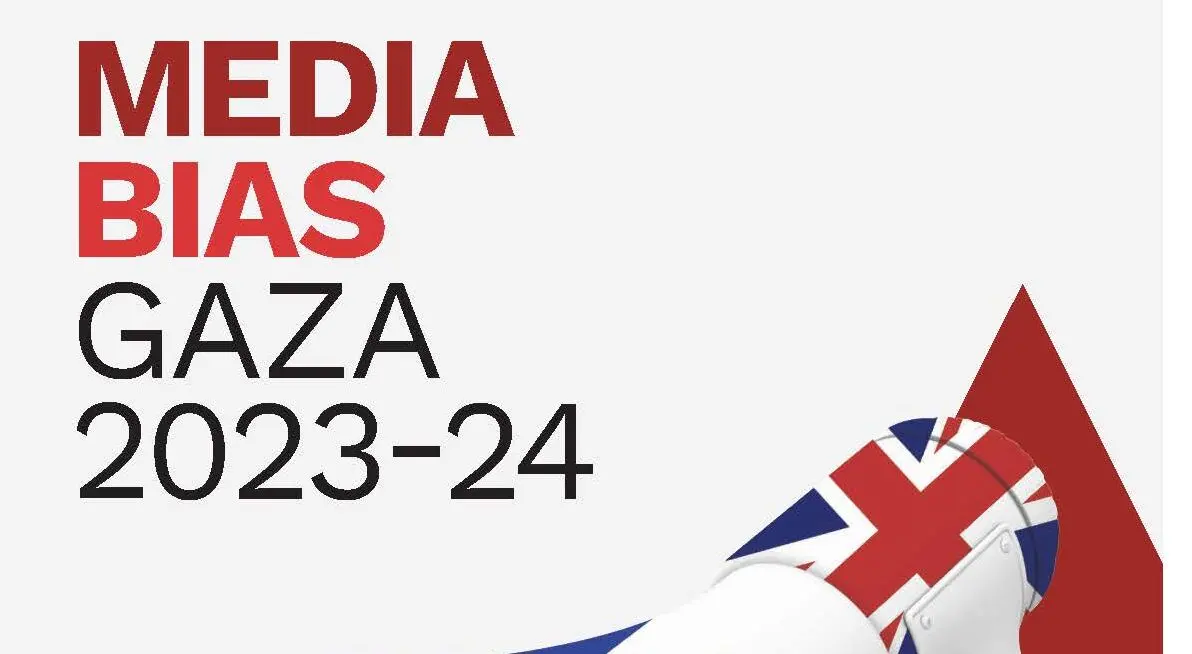

A major new investigation into British media coverage of Gaza is raising profound questions about whether some of the UK’s most influential news organisations failed to accurately communicate the scale, responsibility and human impact of Israel’s military campaign.
Released by UK media monitoring group NewsCord, the study accuses major British outlets of repeatedly softening, obscuring or narrowing the way violence in Gaza has been presented to the public. Through thousands of classified excerpts drawn from hundreds of articles, the report argues that editorial patterns — not isolated mistakes — helped shape a version of the war that muted Palestinian suffering, blurred Israeli responsibility and reduced public exposure to allegations of genocide.
The report lands amid mounting international scrutiny of Israel’s conduct in Gaza, ongoing proceedings at the International Court of Justice, and a growing crisis of confidence in mainstream media institutions. For critics, it offers quantitative confirmation of concerns long voiced by media analysts, Palestinian journalists and independent reporters. For defenders of the outlets examined, it raises difficult questions about methodology, editorial judgment and the boundaries between caution and omission.
The report, based on an extensive examination of 686 news articles and more than 11,000 individually classified excerpts, compares reporting patterns across Al Jazeera, the BBC, Sky News and The Guardian. According to the findings, British mainstream media organisations frequently obscure responsibility for civilian deaths, minimise Palestinian perspectives, and rarely contextualise Israeli political rhetoric that critics argue demonstrates genocidal intent.
NewsCord’s dataset covers a wide range of Gaza-related reporting and attempts to quantify media framing rather than relying on anecdotal criticism. The organisation says its researchers systematically classified language patterns, source attribution, terminology, and narrative emphasis to identify recurring editorial trends.
The findings are likely to intensify an already heated debate over whether British journalism met its ethical obligations while reporting on a conflict that has produced allegations of genocide, war crimes, ethnic cleansing and collective punishment.
The report does not accuse journalists of fabrication. Instead, it focuses on recurring framing choices — who is named, who is quoted, whose claims are qualified and which forms of language are normalised. NewsCord argues that these cumulative decisions can profoundly shape public understanding.
At stake is not merely media criticism but historical memory. Wars are not remembered only through events themselves, but through the language used to describe them. If reporting repeatedly strips away agency, omits political context or privileges one side’s voice over another, the resulting narrative can become a form of soft editing of reality.
That is the central argument underpinning the NewsCord study: that editorial patterns helped construct a mediated version of Gaza that differed significantly from what legal proceedings, humanitarian agencies and eyewitness documentation suggested was unfolding on the ground.
A Question of Attribution
Among the report’s most striking findings is the question of attribution — whether media organisations explicitly state who carried out an attack when Palestinian civilians are killed.
Here the NewsCord dataset supplies hard numbers. According to launch coverage of the report, the BBC failed to name Israel as the perpetrator in 50% of analysed cases involving Israeli attacks in Gaza in which civilians were killed. The Guardian failed to do so in 45% of cases, while Sky News failed to do so in 46%. Al Jazeera, by contrast, failed to name the perpetrator in only 11% of comparable cases.
The report argues that these are not minor stylistic variations but editorial choices with political consequences. A sentence such as “15 killed in strike” or “camp hit overnight” does not merely compress language; it removes agency from the event and weakens the public’s grasp of accountability.
NewsCord also measured passive construction directly. According to the dataset, the BBC used passive voice in reporting Palestinian casualties in 77% of cases, Sky News in 71%, and The Guardian in 67%. Al Jazeera again recorded the lowest rate, at 53%.
That means that in nearly four out of five relevant BBC casualty excerpts, the violence was described in a way that deemphasised who carried it out. For critics of British media coverage, that is the core of the indictment: the public is routinely shown the aftermath of violence, but not always told with clarity who inflicted it.
The report frames this as a structural pattern rather than an accidental weakness of headline writing. When responsibility is blurred often enough, audiences are left with devastation without a clearly stated perpetrator. That, in turn, can flatten a military assault into a haze of tragic but seemingly ownerless suffering.
Death Toll Reporting and Credibility
Another major area of concern raised by the report involves how casualty figures are framed.
The Gaza Health Ministry remains one of the primary sources for casualty data emerging from the territory. However, Western outlets frequently attach descriptors such as “Hamas-run” or “Hamas-affiliated” when citing death tolls.
According to the material supplied with the report, the BBC labels Gaza’s health ministry as “Hamas-affiliated” in 60% of death-toll citations. But when citing those same figures, it mentions that the United Nations considers the numbers credible in only 0.6% of cases.
That asymmetry is central to NewsCord’s case. The report argues that British audiences are repeatedly reminded of a qualifier that may cast doubt on Palestinian casualty figures, while being almost never told that UN bodies and humanitarian agencies have treated those figures as credible enough to use in their own reporting and assessments.
The result, the report suggests, is a subtle but persistent skewing of audience perception. Palestinian statistics are framed as suspect; institutional validation is largely absent.
Critics of that editorial approach say it creates an imbalance in evidentiary standards. Israeli military claims are frequently reported quickly and prominently, while Palestinian casualty figures are accompanied by cautionary language that is not matched by comparable contextualisation of their credibility.
The Language of Genocide
One of the most politically sensitive findings concerns the use of the term “genocide.”
NewsCord’s figures suggest that UK outlets used the word sparingly despite genocide becoming central to international legal argument, public protest and political debate. According to the dataset, the term appeared 15 times in the BBC sample, 12 times in Sky News coverage and 21 times in The Guardian. Al Jazeera used it 58 times.
That gap matters because the allegation is not peripheral to the story. South Africa’s case against Israel at the International Court of Justice placed the accusation at the centre of one of the most consequential international legal proceedings of the war. Whatever position editors take on the merits of the claim, it has been indisputably central to global debate.
The report therefore argues that limited usage of the term in British mainstream coverage cannot be explained simply as caution. In practice, it says, editorial reticence can shrink the public’s understanding of the legal and political stakes of the war.
Supporters of a more restrained newsroom style may counter that genocide is a legal finding rather than a journalistic descriptor. But critics reply that the issue is not whether reporters should declare a verdict of their own; it is whether they adequately report that the allegation itself has become a defining fact of international diplomacy, litigation and protest.
Whose Voices Are Heard?
Just as important as how a story is told, the report argues, is whose story is heard.
NewsCord says the dataset shows an uneven distribution of voice and perspective across British coverage. Sky News, according to the findings, devoted 28% of relevant word count to Israeli perspectives, compared with 15% to Palestinian ones — nearly a two-to-one disparity.
That imbalance is not merely numerical. It shapes who is allowed to appear as fully human in the story: who gets to explain, to grieve, to contextualise, to fear, to justify and to condemn.
Palestinians have often appeared in Western reporting as casualties, crowds or statistics. Israelis, by contrast, are more often positioned as named officials, witnesses, spokespeople and political actors. NewsCord’s argument is that this asymmetry is measurable in text, not just felt by audiences.
The report adds that British outlets included fewer Palestinian voices overall and, when they did include them, devoted less space to them than to Israeli sources. Al Jazeera, by contrast, gave greater prominence to Palestinian voices.
This question of representation has become especially charged because the Gaza war has unfolded in real time across social media, livestreams and first-person testimony from inside the enclave. That has made gaps between visible suffering and institutional framing harder to ignore.
Missing Context Around Political Statements
Perhaps one of the report’s most explosive claims concerns the treatment of statements by Israeli leaders.
According to the material around the report’s release, when senior Israeli officials made explicit statements that critics and legal advocates have cited as evidence of genocidal intent, those remarks went largely unreported in British mainstream coverage. The BBC, NewsCord says, never covered such statements by Benjamin Netanyahu, Isaac Herzog or Yoav Gallant.
This is particularly significant because some of those remarks have been cited in proceedings before the International Court of Justice. In other words, the statements were not marginal internet provocations or activist talking points; they had direct relevance to one of the most important international legal cases arising from the war.
NewsCord argues that omitting or underreporting them stripped British audiences of context needed to understand why genocide allegations were being advanced so forcefully on the international stage.
Defenders of the outlets may argue that newsroom selection is always partial, that not every incendiary remark can be covered, and that context matters in wartime rhetoric. But the scale of the omission alleged by NewsCord is precisely what makes it politically charged: if rhetoric later cited in international legal proceedings is absent from domestic coverage, then the public is receiving a narrowed version of events.
Structural Patterns Rather Than Isolated Errors
NewsCord founder Nima Akram said the findings should be read as evidence of institutional patterns, not one-off lapses.
“The data in this report is not opinion, it’s the result of a systematic classification of thousands of article excerpts covering the same events, in an attempt to measure overall bias in three years of reporting on this long, bloody genocide,” Akram said in a statement.
“What it reveals is consistent and measurable.
“These aren’t isolated events, they’re structural patterns which shape how millions of readers understand Israel’s genocide in Gaza and ultimately whose suffering deserves attention.”
That emphasis on classification and scale is central to the report’s authority. NewsCord says it analysed 686 digital articles and 11,295 excerpts to compare framing across the four outlets. The editorial page for the report describes it as an in-depth examination of how the BBC, Guardian and Sky News obscure Israeli responsibility through attribution gaps, passive voice and the failure to report genocidal statements.
The group is demanding that the outlets publicly review their Gaza coverage against the evidence, disclose the editorial logic behind their reporting practices and revise them where necessary.
A Wider Crisis of Trust
The report lands in a media environment already marked by falling trust in legacy institutions and growing anger over Gaza coverage.
For many viewers and readers, the issue is no longer whether British media made occasional mistakes, but whether those mistakes reveal a deeper editorial culture: one that treats Palestinian testimony with suspicion, Israeli officialdom with deference, and legal allegations of mass atrocity with linguistic caution bordering on evasion.
The study also arrives at a moment when audiences can compare institutional reporting against a vast archive of images, eyewitness accounts, livestreams and independent journalism from Gaza itself. Unlike in earlier wars, the public is not dependent on a handful of gatekeepers for visual evidence of the destruction.
That has sharpened the consequences of editorial framing. Where images show flattened neighbourhoods, dead children and mass displacement, euphemistic or actorless language can appear not merely inadequate but complicit.
Responding to the findings, former Labour leader Jeremy Corbyn told Novara Media that the British media has “manufactured consent for genocide.”
Whether one accepts that formulation or not, it captures the broader political force of the NewsCord intervention. The report is not simply accusing British outlets of imbalance; it is arguing that recurring editorial choices have helped produce public distance from Palestinian suffering and diluted clarity about Israeli responsibility.
Media Accountability and Public Memory
For NewsCord, the implications extend beyond one conflict.
How Gaza is described now will shape how it is remembered later. The report suggests that omissions, qualifiers, passive phrasing and sourcing imbalances do not just influence daily coverage; they help construct the historical record that future audiences inherit.
If civilian deaths are reported without clearly naming the force that caused them, if casualty figures are repeatedly qualified but rarely validated, if Palestinian voices are outnumbered and compressed, and if statements later cited in international court proceedings go uncovered, then the public memory of the war may be less an accurate record than an edited narrative.
That is why the report’s authors are presenting this not as a narrow media-watchdog dispute but as a democratic question. Journalism is supposed to tell the public what is happening, who is responsible and why it matters. When it fails to do so on a question as grave as mass civilian killing, critics argue, the consequences are moral as well as professional.
Simply put, the NewsCord data leaves little room for the defence that what audiences have witnessed is a collection of isolated wording choices. The central claim of the report is that the patterns are systematic, measurable and deeply consequential.
And that is what makes this more than a media story. It is a story about power: who gets named, who gets heard, whose grief is treated as credible, and how a war enters public consciousness while it is still being fought.