
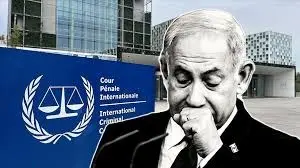

For years, British ministers have presented international law as the moral backbone of the global order—invoked to condemn adversaries, justify interventions, and police the conduct of weaker states. Yet when that same law threatened a close ally, the commitment collapsed. According to the International Criminal Court’s chief prosecutor, Britain warned in April 2024 that it could defund—or even withdraw from—the ICC if it proceeded with an arrest warrant for Israeli Prime Minister Benjamin Netanyahu.
The warning was not framed as a legal objection or evidentiary dispute. It was a political ultimatum: accountability, or abandonment. Britain did not ultimately leave the court, nor did it formally defund it. But the message, as described by the prosecutor, was unmistakable. International law would be defended only so long as it did not apply to those under Britain’s protection.
The moment exposed a truth long obscured by diplomatic language. The so-called “rules-based international order” was not a universal system of law, but a conditional one—enforced downward, suspended upward, and withdrawn entirely when it approached power.
Crossing a Line the Court Had Never Crossed
When the International Criminal Court moved toward issuing an arrest warrant for Netanyahu on 20 May 2024, it crossed a line it had never crossed before. Since its founding, the ICC had overwhelmingly prosecuted leaders from African states or figures isolated from powerful geopolitical patrons. Critics had long accused it of selective justice—of operating where it was safe, and retreating where it was not.
International justice, many argued, stopped at the edge of Western power.
The Netanyahu case shattered that assumption. For the first time in its history, the ICC sought to apply the same legal standards used against African dictators and Russian officials to a democratically elected leader of a Western-aligned state. It was a test not only of the court’s mandate, but of the political order that surrounded it.
Britain’s Threat: Defund the Court or Leave It
In testimony later cited by The Guardian, ICC chief prosecutor Karim Khan told the court that on 21 April 2024 he received a phone call from a senior British official. The message, Khan said, was stark: if the ICC proceeded with an arrest warrant for Netanyahu, the United Kingdom could defund the court entirely or withdraw from the Rome Statute, the treaty that created it.
Khan did not publicly name the official, but multiple reports identified the caller as then-Foreign Secretary David Cameron.
The threat was extraordinary. Britain has repeatedly portrayed itself as a guardian of international law, invoking legal norms to criticise Russia’s invasion of Ukraine, condemn human-rights abuses elsewhere, and justify its own foreign-policy positions. Yet here, according to the prosecutor, the same government signalled it would abandon international justice rather than allow it to touch Israel.
Britain ultimately did neither. But the threat alone was revealing. It demonstrated that support for international law was not principled, but contingent.
American Pressure and Moral Coercion
Pressure did not come from London alone.
Khan stated that on 1 May 2024, he received a call from U.S. Senator Lindsey Graham, who warned that applying for arrest warrants could result in Hamas killing Israeli hostages. The logic of the claim was unclear, but its intent was not. It was an attempt to shift moral responsibility for any future violence onto the act of legal accountability itself.
The implication was that justice would be blamed for bloodshed.
For Khan, the sequence of events was unmistakable. As the court approached a decision unprecedented in its history, the world’s most powerful states moved to stop it—through threats, pressure, and warnings of consequence.
The Allegations That Changed Everything
Then came the allegations.
According to Khan, on 2 May 2024, he learned for the first time of sexual misconduct allegations against him. On 6 May, he said, a third party filed a complaint with the ICC’s internal oversight mechanism without the alleged victim’s consent. When the complainant indicated she did not wish to pursue the matter, it was dropped.
Months later, the allegations resurfaced. In May 2025, The Wall Street Journal published an article reporting claims by a former assistant, in her 30s, that Khan had forced her into non-consensual sexual acts on multiple occasions across several countries while traveling for work.
Khan denied all wrongdoing. Nonetheless, within days of the article’s publication, he announced that he would take indefinite leave pending any investigation—effectively removing the chief prosecutor driving the Israel case from active duty.
The timing raised unavoidable questions.
Competing Narratives, Identical Outcome
Two explanations quickly emerged.
Khan’s implicit argument was chronological and political. He signalled intent to prosecute Israeli leaders. Western governments issued threats. He refused to yield. Then allegations surfaced, and the prosecutor pursuing Israel was removed from the field.
The Wall Street Journal advanced the opposite theory. It suggested that Khan, aware of the allegations, accelerated the Netanyahu warrant to shore up political support among ICC member states critical of Israel—using the case as a form of institutional self-protection.
Yet the logic of that argument was strained. Announcing the most politically explosive arrest warrant in the court’s history—one guaranteed to provoke retaliation from the United States and its allies—would be a remarkably self-destructive way to divert attention from personal allegations.
Whether coincidence, calculation, or something darker, the outcome was the same: the ICC prosecutor leading the most consequential case in the court’s history was sidelined at a critical moment.
Sanctioning the Court Itself
While Britain threatened withdrawal, the United States escalated.
According to an Associated Press investigation, ICC judges and prosecutors have been subjected to sweeping U.S. sanctions—measures normally reserved for autocrats, terrorists, and organised-crime figures.
The effects have been devastating in their banality.
Bank accounts were frozen. Credit cards stopped working. U.S. visas were revoked. Microsoft terminated official email accounts. Consumer technology quietly disappeared.
Canadian judge Kimberly Prost, sanctioned in August, reported losing access to her credit cards overnight. Her Amazon Alexa stopped responding. An ebook she had purchased later vanished from her device.
“You become a non-person,” she told the AP. “It’s the uncertainty. Small things accumulate.”
Deputy prosecutor Nazhat Shameem Khan described never knowing whether a declined payment was a technical glitch or another sanction taking effect.
Under U.S. law, companies face severe penalties if they provide sanctioned individuals with “material or technological support.” That means repairing a laptop, maintaining an email account, or offering cloud access could expose a company to prosecution. The result is total digital exile.
The Weaponisation of Everyday Life
What this episode reveals is not merely political pressure, but the weaponisation of modern infrastructure.
Sanctions no longer require arrests or raids. They operate through finance, software, and platforms. Phones, laptops, vehicles, household appliances—even books—can be remotely disabled. Life itself becomes conditional.
International justice, once imagined as standing above power politics, now depends on servers, payment networks, and licenses controlled by the same states it is meant to hold accountable.
For institutions like the ICC, the implication is existential. Without independence from U.S.-dominated digital and financial systems, accountability for powerful states may be structurally impossible.
A Test the System Could Not Pass
The Netanyahu warrant was supposed to demonstrate that international law applies equally to all.
Instead, it revealed how fragile that principle really is.
Threats of defunding. Threats of withdrawal. Personal pressure. Sanctions that erase judges from modern life. The system did not merely bend—it recoiled.
Whether or not the case against Israel ultimately proceeds, the lesson has already been delivered to future prosecutors. When international law approaches real power, it does so at its own peril—and those tasked with enforcing it will pay the price.
International justice crossed a line. Power ensured it would not cross it again.